
Designing for Permanence: The Anantgram Story
2017 —
Anantgram did not begin as a farm plan. It began as a search for food that could be trusted.
A serious illness in the family, followed by many attempts at treatment across different medical systems, led to a deeper search for healing. Along the way, food became central — not food as habit or convenience, but food as nourishment, medicine, and relationship.
That search led to a simple but difficult requirement: chemical-free vegetables, greens, grains, fruits, and food grown with integrity. But the more we looked, the more we realised how hard it was to trace what came to the plate. Chemicals entered food systems at many points — seed, soil, cultivation, pest control, harvest, storage, and transport. Certification existed, but trust was uneven. Authenticity was difficult to verify. Traceability was weak.
What began as a search for clean food slowly became a search for a clean system. Because food does not begin in the kitchen. It begins in soil. Soil depends on water. Water depends on landscape. Landscape depends on vegetation, animals, climate, and care. And care depends on people — their values, habits, communities, and culture.
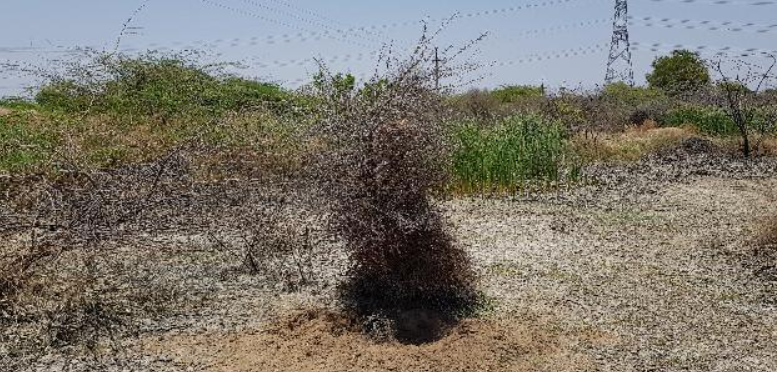
Across the world, land itself is under stress. UNCCD estimates that up to 40% of the planet’s land is degraded, affecting nearly half of humanity. In India, the Desertification and Land Degradation Atlas reported about 97.85 million hectares — nearly 29.7% of the country’s geographical area — under land degradation in 2018–19.
The question was no longer only, “Where can we find safe food?” It became, “What kind of land can continue to grow safe food — not for one season, but for generations?”
This question led us to Permaculture.
Permaculture is rooted in the idea of permanent agriculture and permanent culture. Permanent agriculture is not agriculture that is fixed or unchanging. It is agriculture that can endure without exhausting the soil, water, farmer, eater, or future. But agriculture alone cannot be permanent if the culture around it is not. How people eat, build, share, learn, rest, and take responsibility for land also matters.
“What kind of land can continue to grow safe food — not for one season, but for generations?”
Permaculture appealed not only because it offered techniques, but because it began with ethics: Earth Care, People Care, and Fair Share. Earth Care asked that soil, water, trees, birds, insects, animals, and invisible life be treated as participants in the system. People Care asked that food, shelter, health, livelihood, learning, and wellbeing be included in the design. Fair Share asked that abundance be circulated, limits be accepted, and surplus be returned to the system that created it. Permaculture came from a space of positivity and love.
The principles followed the ethics: observe before acting, catch and store energy, obtain a yield, integrate rather than segregate, use edges, value diversity, design from patterns to details, and respond creatively to change.
At Anantgram, these were not abstract ideas. The dam, trenches, food baskets, tree systems, bird habitats, natural buildings, and even the failures became expressions of these principles.

The land that became Anantgram lies in Suddaguntapalli village, Ramagiri Mandal, in Sri Sathya Sai district of Andhra Pradesh. Even the village name carried a clue. Suddaguntapalli means limestone quarry.
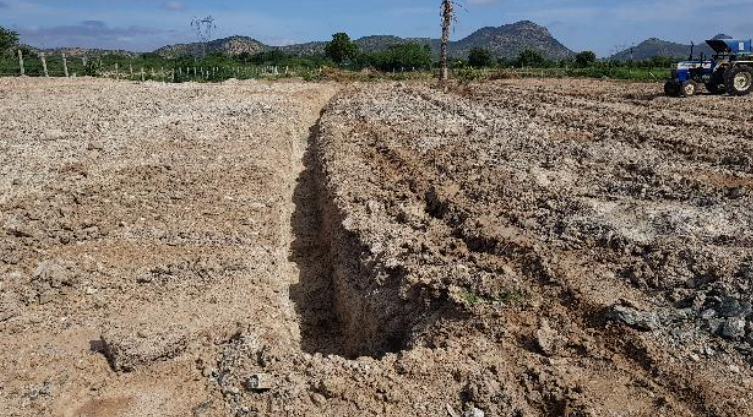
It was uncultivated fallow land where goats grazed among thorny Prosopis juliflora shrubs. During heavy rain, parts of it flooded. White calcareous sodic patches appeared across the ground. The soil was not uniform or easy. Some areas were red and sandy.
Some were rocky. Some were alkaline. Some held water too long. Some dried too quickly.
It was not a romantic blank canvas ideal for farming – even locals didn’t farm there. It was a stressed landscape — grazed, exposed, calcareous, flood-prone in places, and shaped by the harshness of semi-arid Anantapur, the second-driest district in India.
In a dryland landscape, water is the first architecture.
Before buildings, plantations, fields, or housing, there had to be a relationship with rain. The challenge was not simply that there was too little water. The challenge was that water arrived unevenly — too little for much of the year, too much in intense moments, and not enough held in the soil for life to continue through the dry months.
So the early design work began by reading how water moved. Where did rain fall? Where did it run? Where did it collect? Where did it stagnate? Where could it be slowed, spread, sunk, stored, and safely drained?
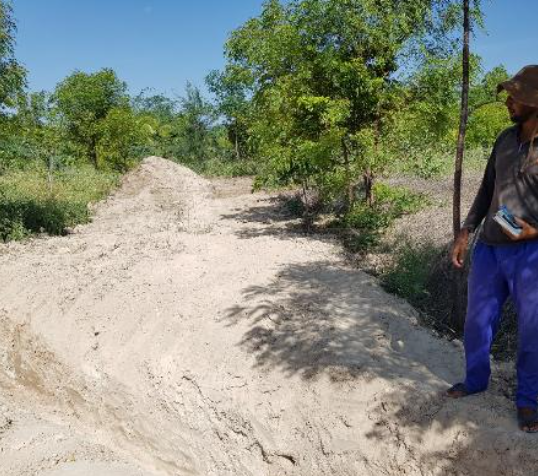
Over time, Anantgram’s water systems began to take form: five lakes, around sixty ponds, three canals running over a kilometre in total, more than ten kilometres of trenches, an earthen dam of approximately two crore litres, and lined sumps adding around twenty-eight lakh litres of storage.
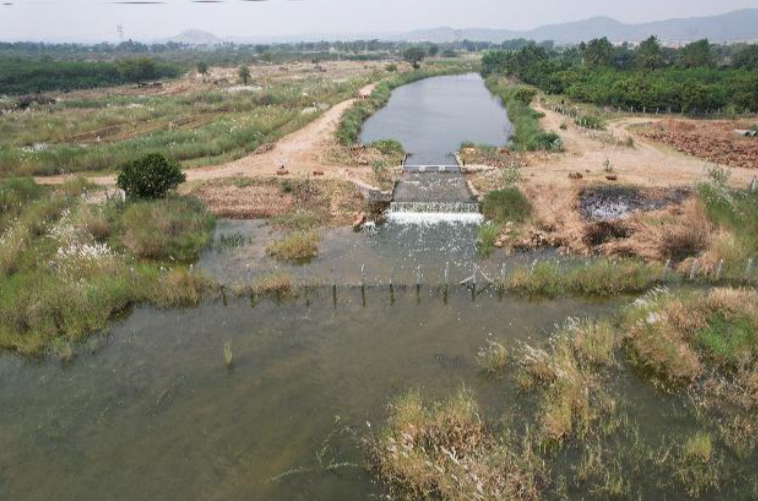
But these are not ornamental water bodies.
They are organs of the landscape.
They hold monsoon rain. They recharge soil. They support trees. They moderate heat. They create habitat. They make farming possible. The first time the dam filled, it was not merely a storage event. It was proof that the land could respond.
But water also teaches humility.
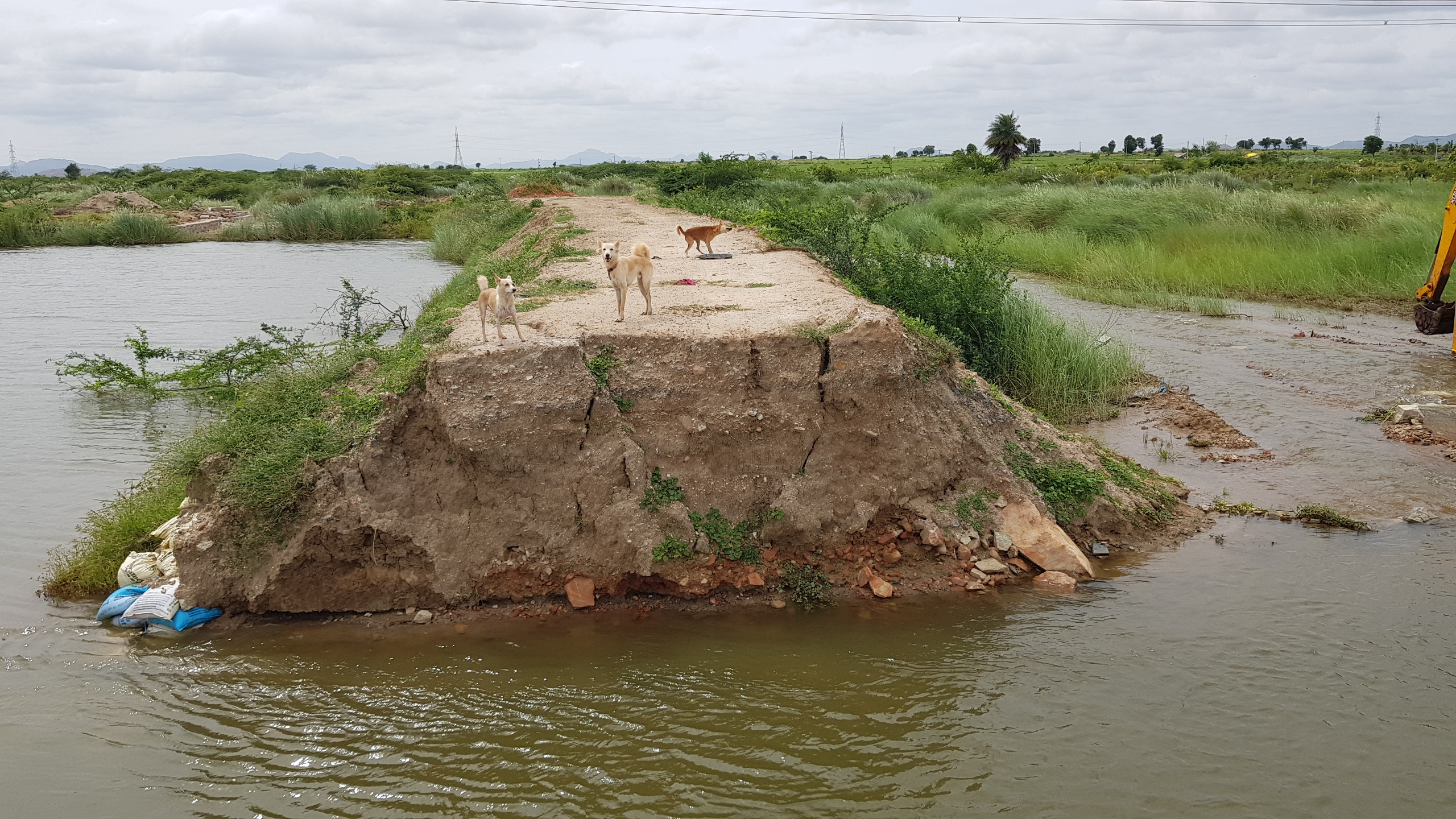
The dam filling gave confidence. The dam breaking gave instruction.
That moment became part of Anantgram’s education. Permanence was not achieved by building once and assuming success. It came through feedback, failure, repair, redesign, and respect for water’s force.
If water was the first architecture, soil was the first truth.
If water was the first architecture, soil was the first truth.
Soil reports made it clear that Anantgram was not one kind of land. It was a mosaic of conditions — red sandy loam, calcareous patches, sodic areas, rocky clay loam, alkaline zones, and places where waterlogging shaped what could and could not grow.
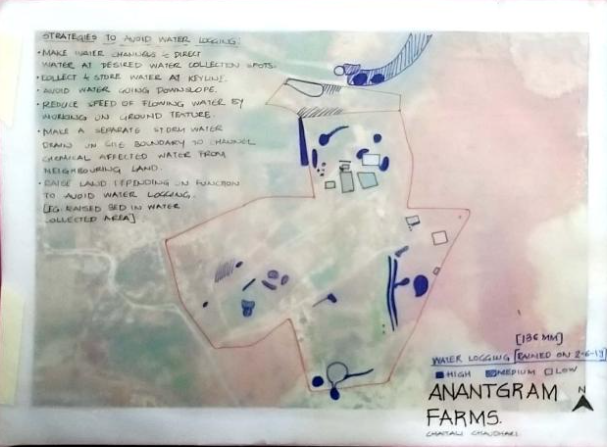
The white calcareous sodic soil affected plant choices, water movement, root health, nutrient availability, drainage, and long-term fertility. It reminded us that permanent agriculture cannot be built by treating soil as an inert medium into which inputs are added.
Early experiments did not always work. Some ideas succeeded in small patches and struggled when scaled. Some crops responded well in one area and failed in another. Some designs had to be revised after observing waterlogging, heat, pest pressure, poor soil response, or labour realities.
These failures were not interruptions to the design process.
They were the design process.
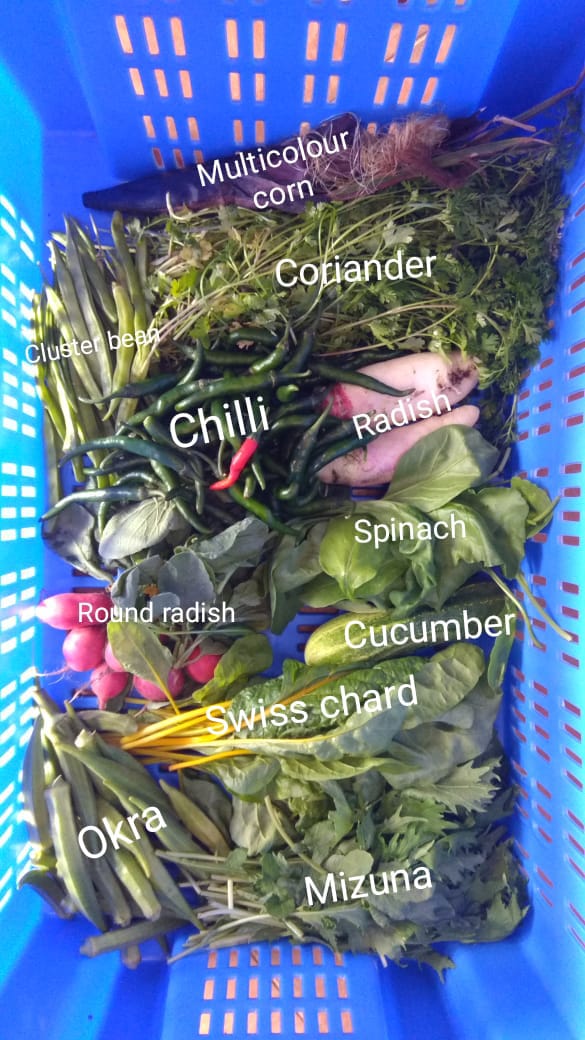
The food system became a weekly test of this learning. Clean food was only the first layer. The deeper question was nutrition. A healthy food system could not depend on one crop, one season, or one idea of purity. It needed diversity — leafy greens, vegetables, legumes, grains, cereals, fruits, herbs, dairy, spices, fats, and seasonal foods. It needed adequacy, balance, moderation, and variety.
Growing food for a few weeks is different from growing food for all 52 weeks of the year. A year-round food system needs water security, soil fertility, crop rotation, nurseries, compost, animals, shade, storage, processing, farmer skill, and continuous observation.
When Anantgram began sending chemical-free food baskets in November 2018, it was not just a produce initiative. It was a weekly rhythm of accountability. The first food basket closed a circle: what began as a search for trustworthy food had become food grown from land that was itself being restored.
This is also why Anantgram had to be imagined as a landscape, not merely as a field. A few acres can grow vegetables. But life asks for more than vegetables. It asks for water, shelter, shade, material, fodder, fuel, biodiversity, livelihood, learning, beauty, community, and places for rest.
The 125 acres gave enough room for these systems to relate to one another — water bodies and dryland edges, food gardens and tree belts, grazing and fodder, composting and animal integration, natural building materials, learning spaces, farm work, retreats, and habitat for other species.
Over the years, resilience was tested in ways no design drawing could fully predict.
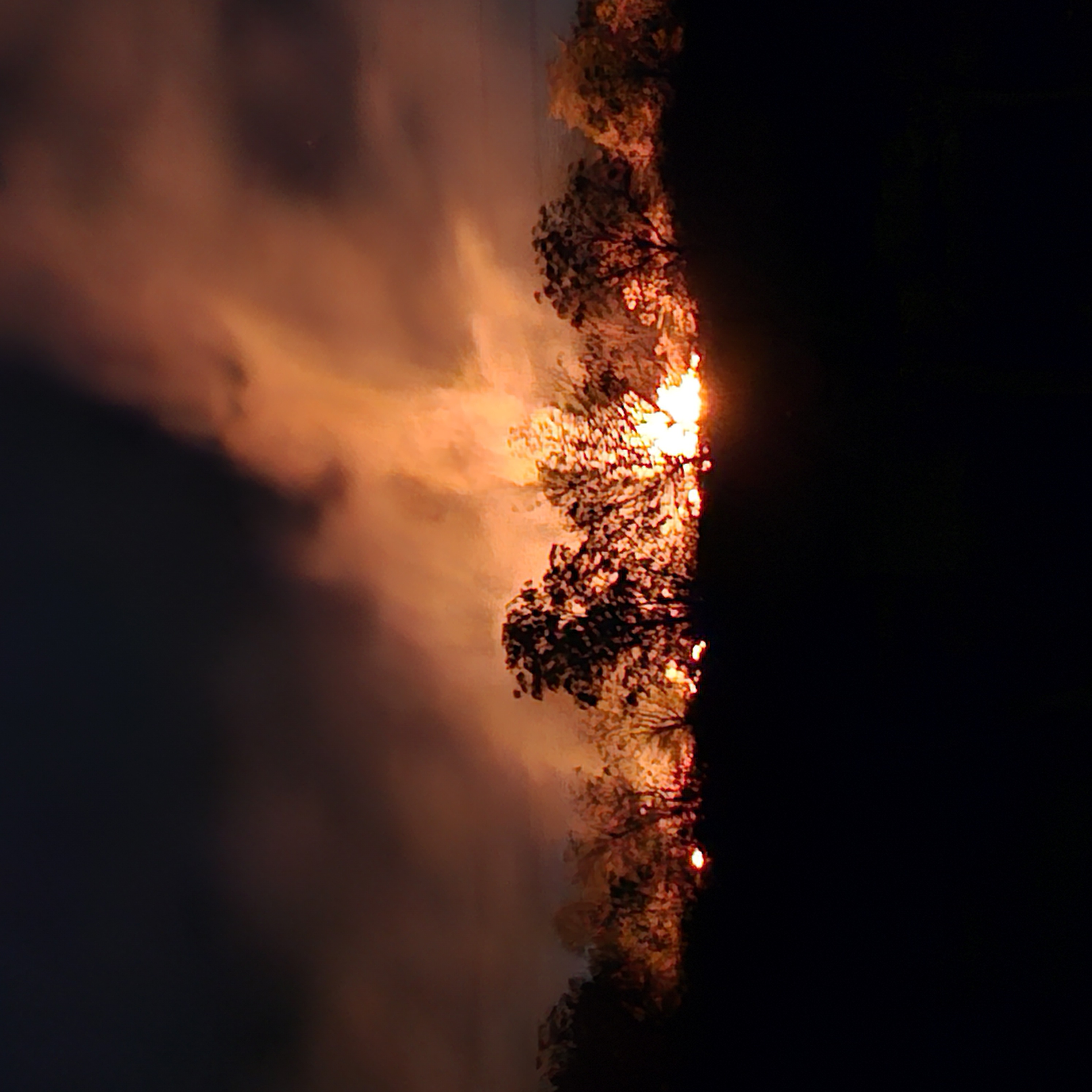
There were floods and a 92 kmph wind event. There were fires, thefts, staff turnover, local constraints, and the everyday challenge of aligning farm needs with local realities.
The HNSS canal, an important water source in the region, was repeatedly broken multiple times a year to meet local needs, changing water flows and creating new pressures. Water, which had once been scarce, began creating a different kind of challenge in some sections: the water table rose, wet feet became a problem, and even hardy neem trees began dying in certain areas.
The design had to evolve again.
In the earlier years, the work was about catching and storing water. In the later years, it also became about drainage, root-zone health, and biodrainage — using plants and landscape strategies to move excess water, protect tree systems, and restore balance.
Permanence was not a slogan. It had to survive weather, people, time, uncertainty, and unintended consequences.
Trees became one of the long answers to this uncertainty.
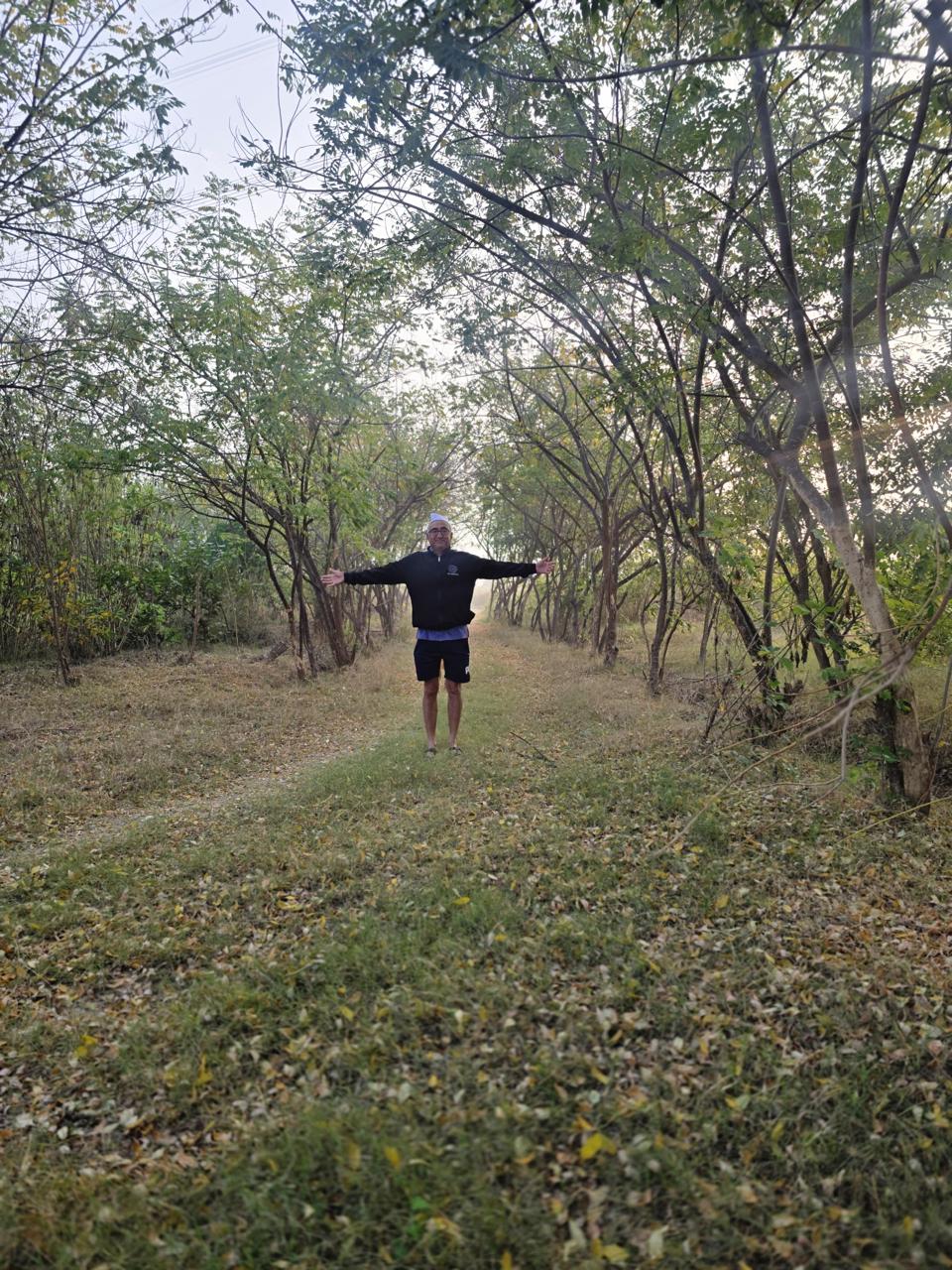
In a hot, semi-arid landscape, trees are not only crops or scenery. They are shade, biomass, wind protection, habitat, root structure, soil cover, future timber, food, fodder, nesting space, and microclimate. Vanaa later emerged as one expression of this long view — a teak-based agroforestry landscape where trees are part of a wider system of water, soil, biodiversity, and custodianship.
Trees ask people to think in decades. To plant a tree in such a place is to make a promise to time.
To plant a tree in such a place is to make a promise to time.
The return of birds gave Anantgram another kind of soil report — not a laboratory report, but a living one.
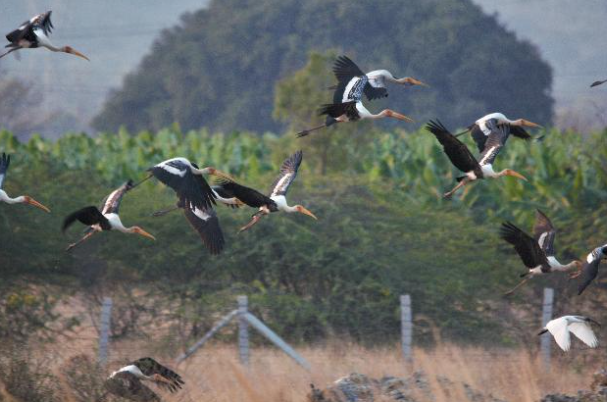
Painted Storks and herons spoke of shallow wetlands. River Terns, darters, and cormorants spoke of water deep enough to hold fish. Bee-eaters spoke of insects. Short-toed Snake-Eagles spoke of reptiles, open ground, and hunting perches. Owls spoke of night life, cavities, and prey cycles.
These birds are not just sightings. They are indicators of relationships returning.
Anantgram has now recorded more than 160 bird species across its phases. That number is important, but the deeper meaning lies in the range of habitats those birds represent. The farm is not becoming only greener. It is becoming more complex.
The birds became witnesses to the design.
After Roti came Makaan.
The search that began with food naturally expanded into shelter. Anantgram asked: what does it mean to build in a way that belongs to the land? This led to natural materials, breathing buildings, stone, lime, mud, bamboo, thatch, reused resources, shade, orientation, airflow, and a slower relationship with comfort.
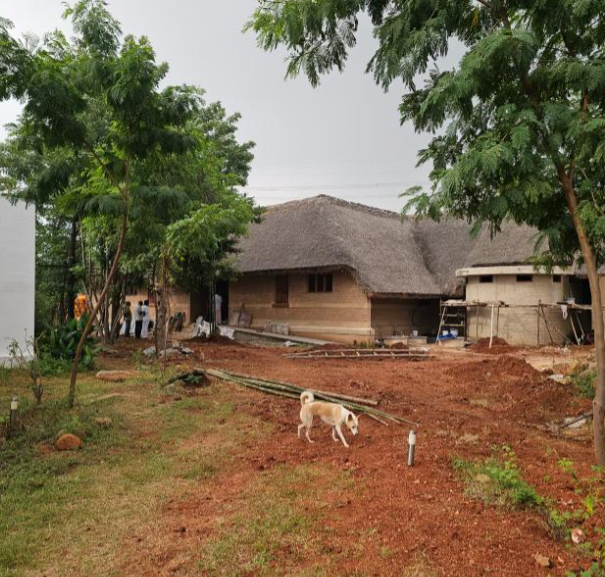
Permanent culture asks not only what we grow, but how we live.
Anantgram Anubhava now invites people to experience this living system directly — through birding, walks, food, retreats, workshops, and time spent on the land.
The dash after 2017 matters.
Anantgram’s story is not complete. It is not meant to be complete.
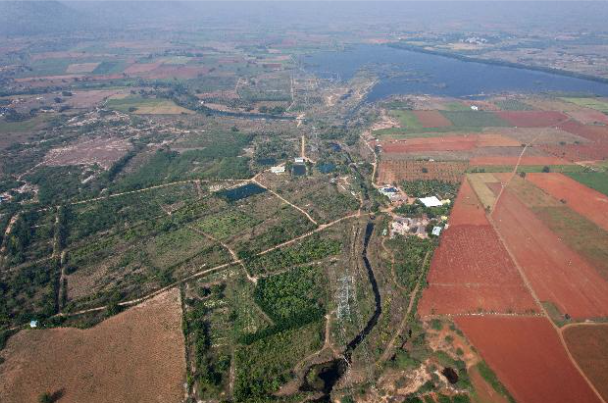
The land is still teaching. Water systems are still being refined. Soil is still being built. Trees are still growing into their roles. Birds are still arriving. Buildings are still being understood through use. Food systems are still evolving.
People are still joining the story as visitors, learners, farmers, collaborators, friends, and custodians.
Designing for permanence is not designing something that never changes.
It is designing a place that can keep becoming more alive — through flood and drought, success and failure, food and shelter, birds and people, agriculture and culture.
In permaculture, permanence is not a fixed state. It is a practice.
The story that began in 2017 remains open because permanence, in a living landscape, is never finished.
It grows along with us, teaching us to observe, experience and evolve.